

Echoes of Indigo: A Slow Walk Through a Miao Valley in Guizhou
Guizhou is a province of karst — a landscape of stone cones and water, and valleys in between where the villages sit. The soil is thin, the water is good, and the light does something to colour that I still cannot fully explain. I went looking for indigo, which I had mostly only seen as a flat swatch in a design book, and found it in a room with a vat in it.
The vat
The dye house is indoors, which makes sense once you are in it. A large vat sits in a bamboo-woven cradle that holds its heat and lets you work around it, and the liquid in it is not a clean blue but the deep green-black of a dye that has been fed and fed for a long time. A blue garment was draped over a rail above it, still wet, and beside the vat another one held blue water with a stick standing in it.
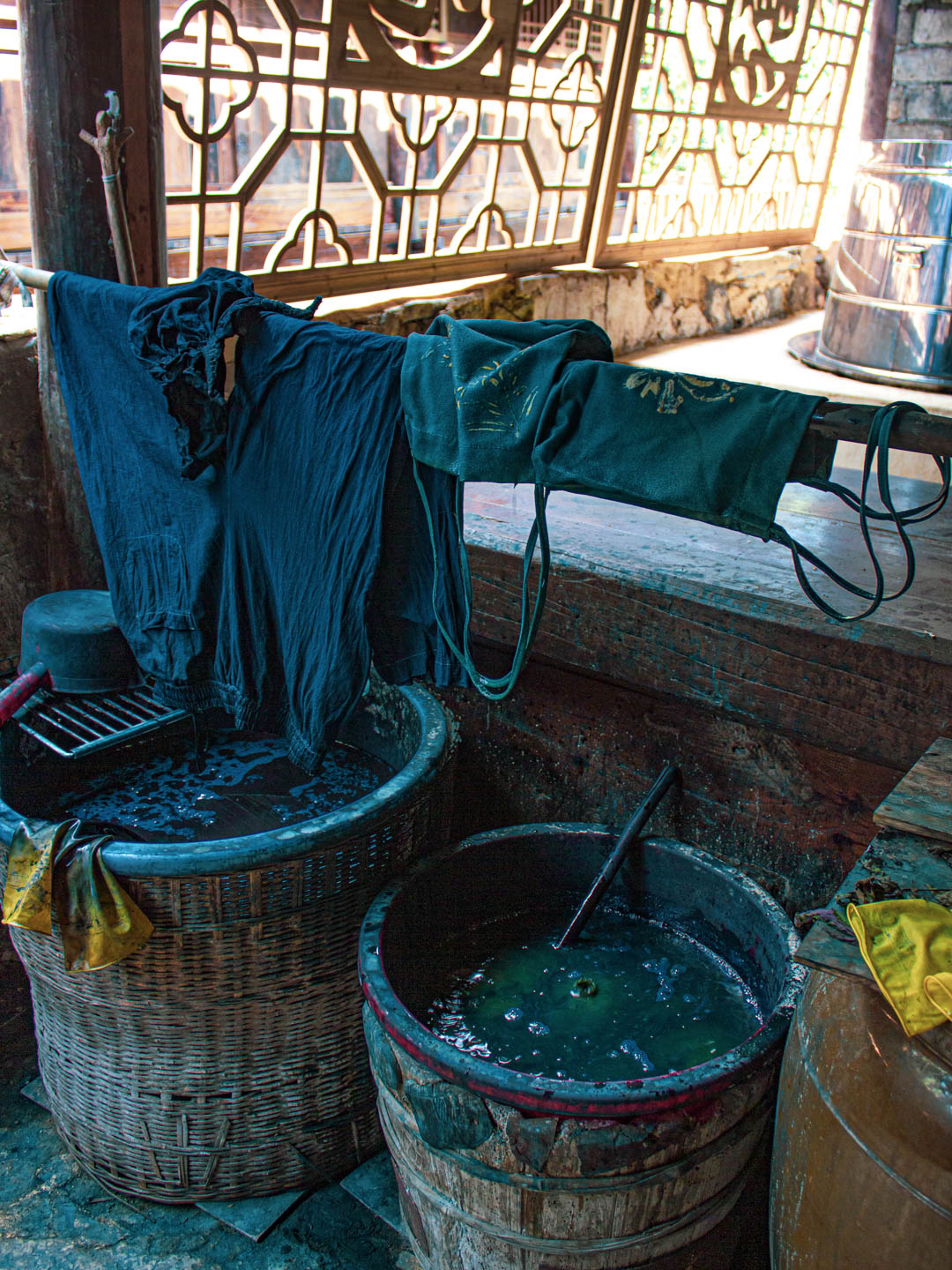
The window in that room was a lattice, and the light came through it in a grid. Everything in the room is functional and none of it is old-fashioned on purpose: the bamboo cradle is better engineering than a metal one would be, and it will outlast anything bolted together.
Indigo does not behave like other dyes. It does not dissolve into the fibre so much as settle into it, layer on layer, and it needs the cloth to come out of the vat and into the air before it turns from green to blue. That is why the garment over the rail is hanging there and not in a bucket, and why the whole process has a smell you remember longer than the colour does — slightly sweet, slightly sharp, like cut grass.
The jacket on the balcony
On the same day I passed a balcony where a jacket was drying over the rail — deep blue, full-length, the kind of thing that takes an hour to rinse and a day to darken. Behind it, the valley opened up: sharp green peaks, a strip of blue sky, and a small flag on a pole at the edge of the roof.
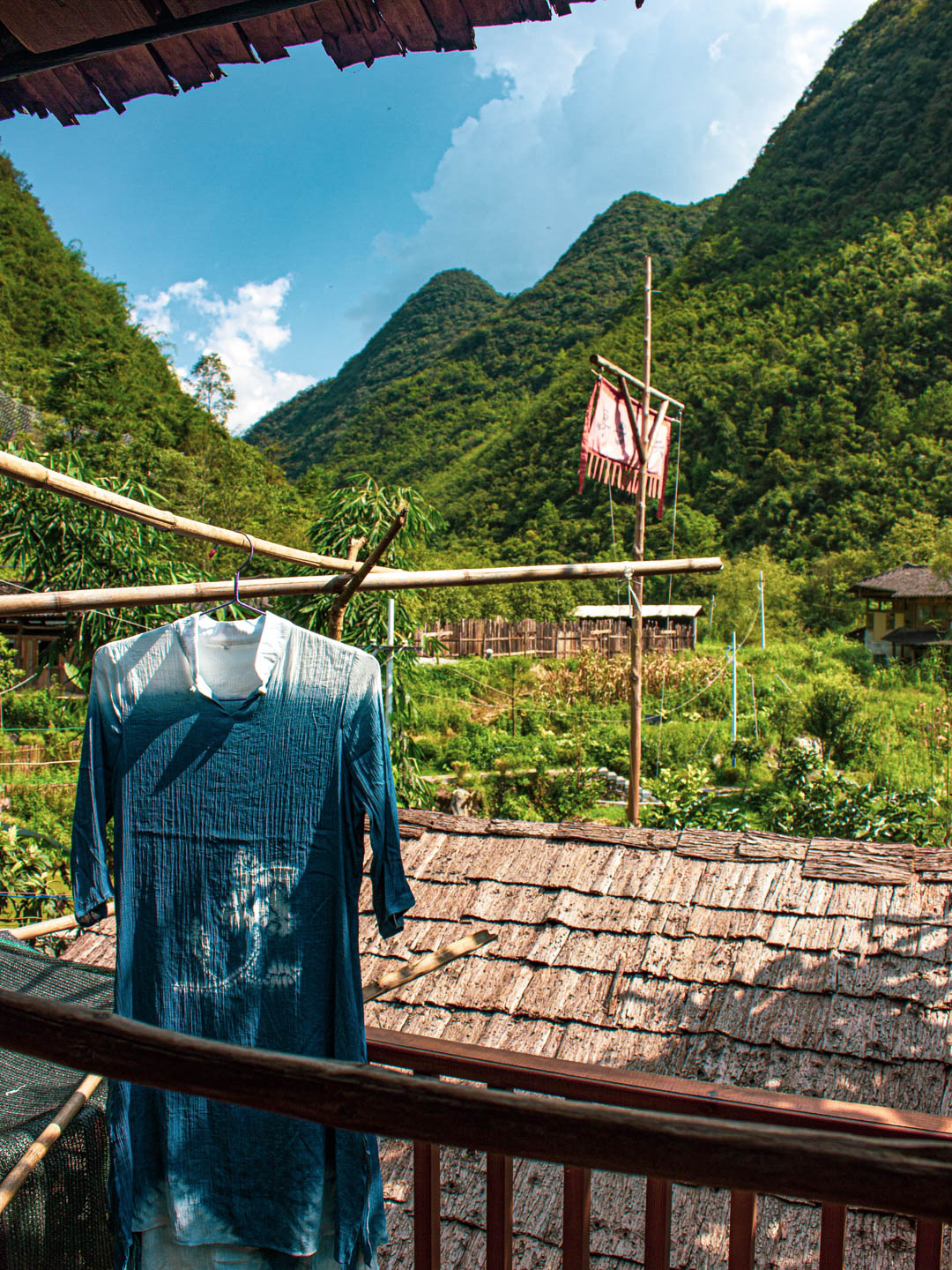
It is the single clearest picture I took, and I have no idea how I missed it for so long. The blue of the jacket and the blue of the sky behind it are almost the same value, and the green of the hills sits between them. Any photograph of this valley is really a photograph of two blues with mountains in the middle.
Houses that have to breathe
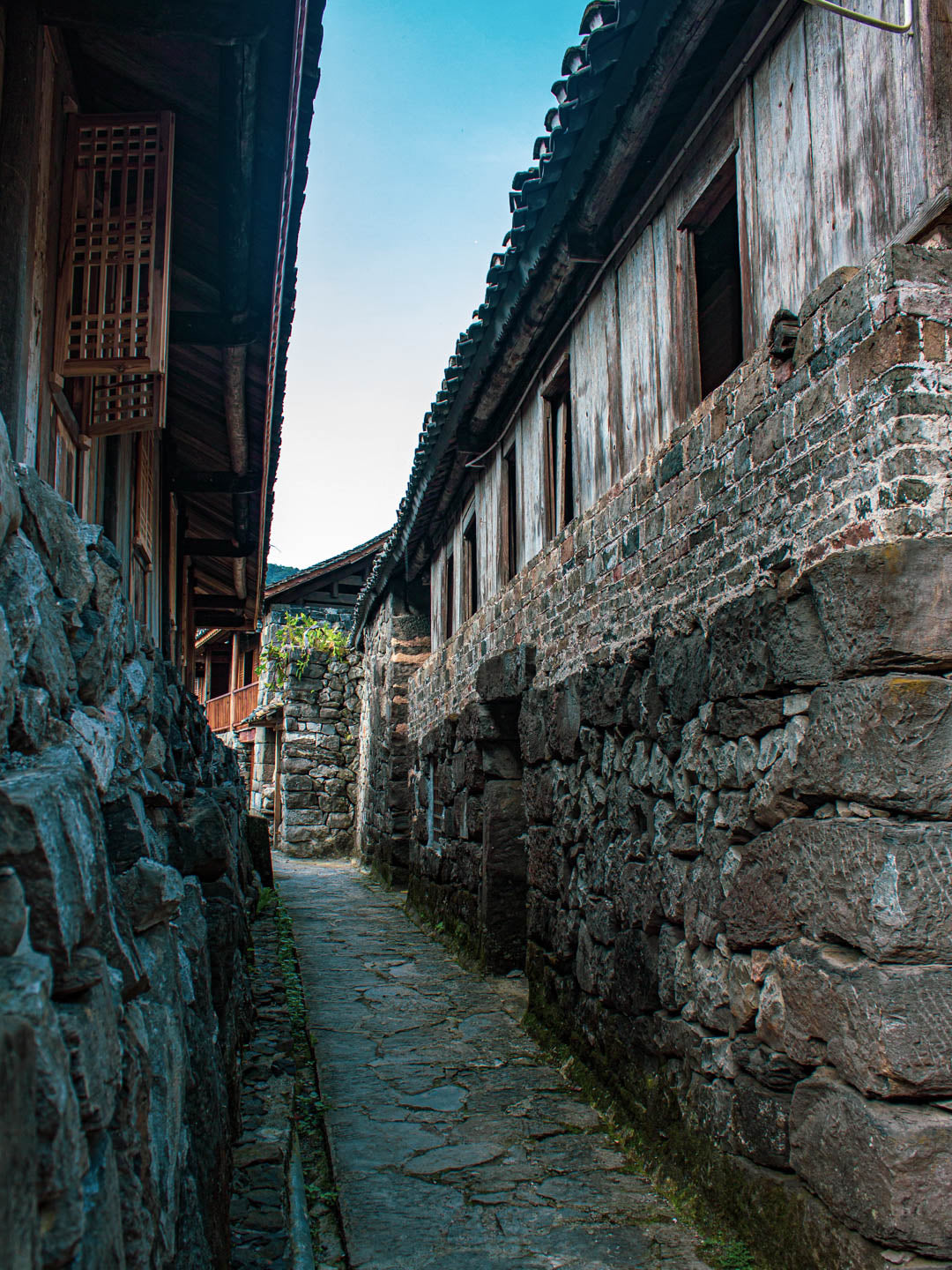
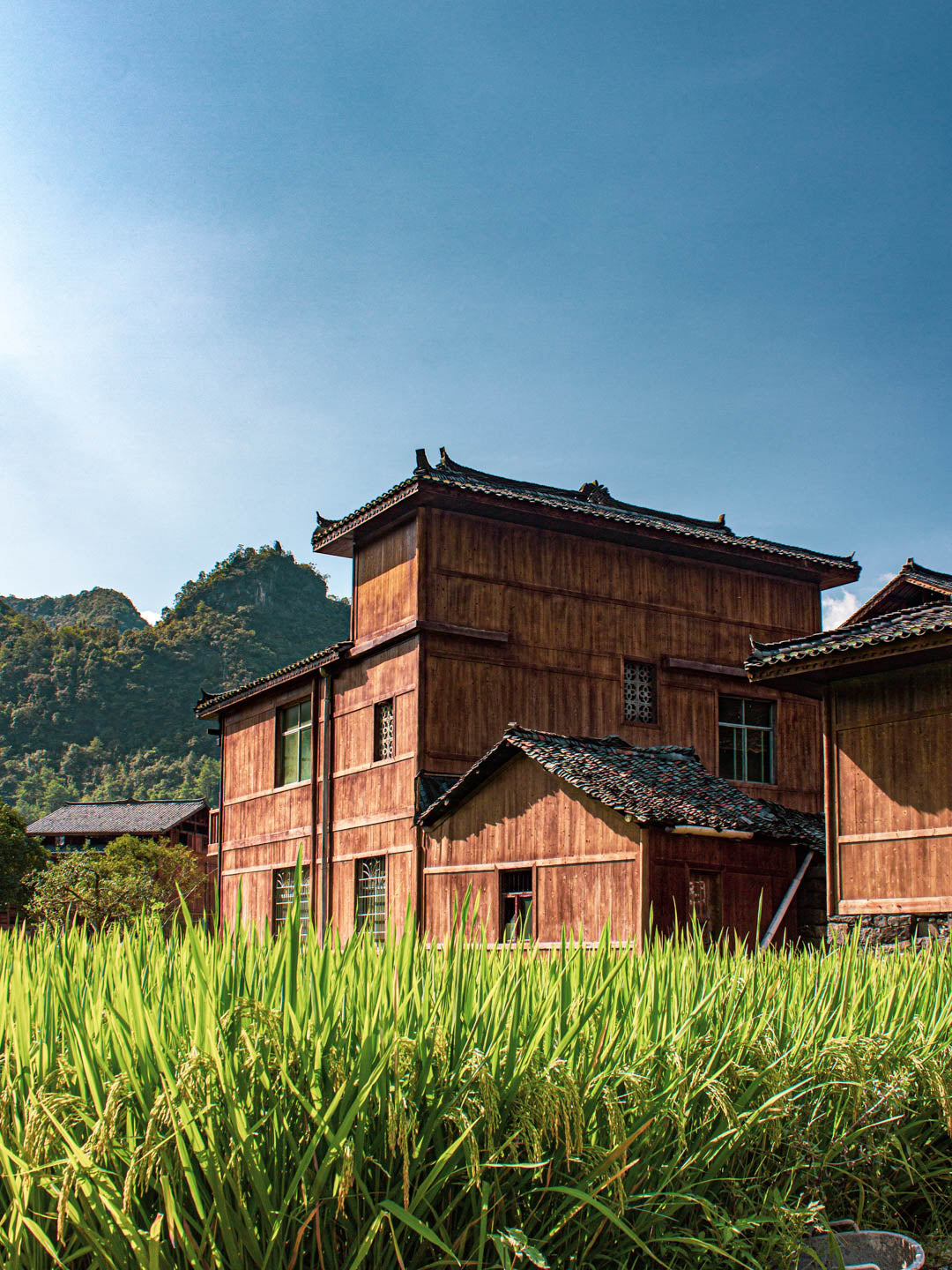
The houses here are timber on stone, and they have to cope with more rain in a month than most places get in a year. So they are built high on posts, with the roof pitched steeply and the eaves reaching well out past the walls, and the timber is left to breathe rather than sealed inside. Walking the lanes, the houses are close together and the ground under them is paved in flat stone that has been walked smooth.
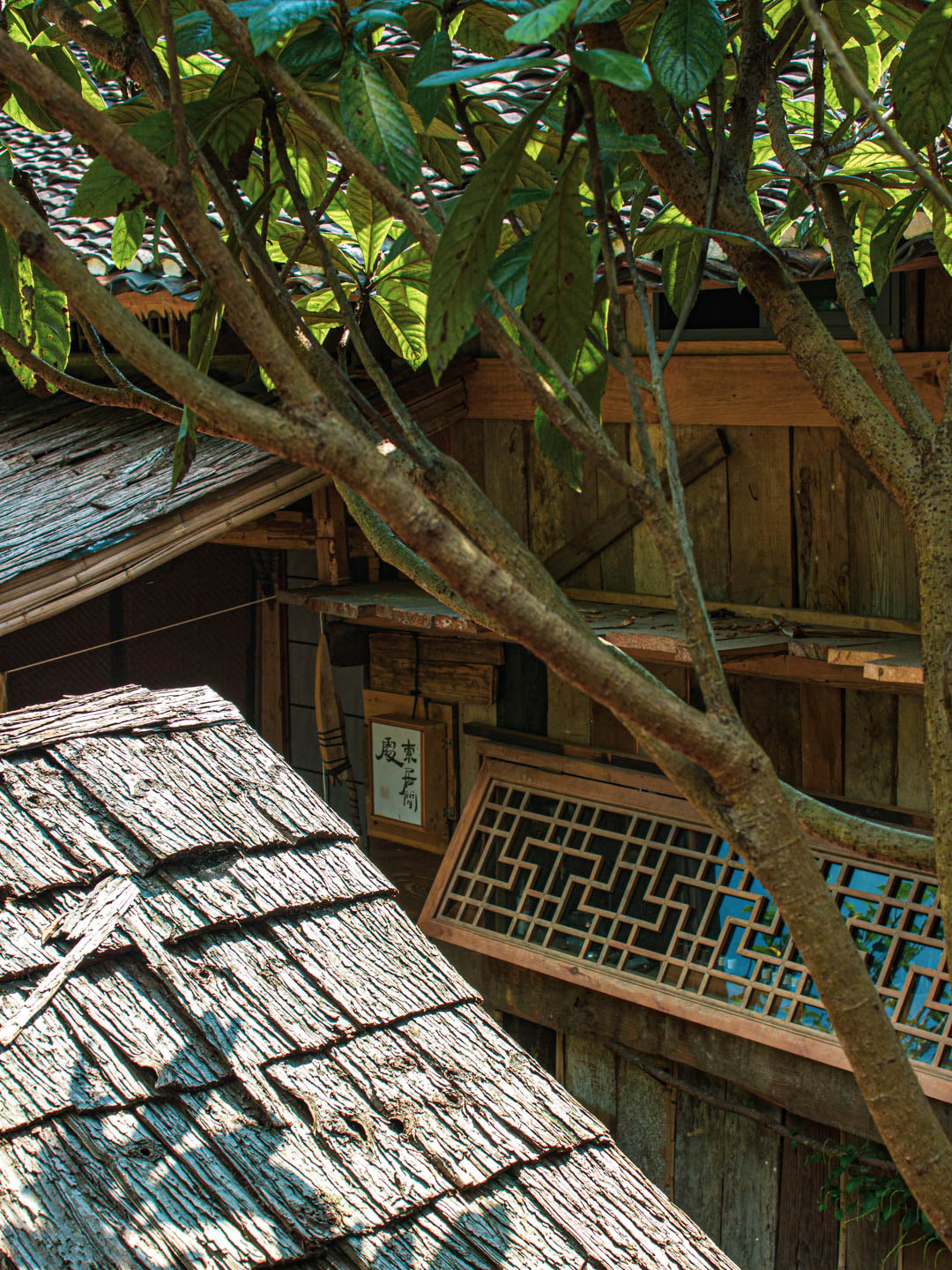
Higher up, away from the lanes, the houses sit on their own in the grass. A wooden building on a slope, raised on posts, with the hill falling away behind it and nothing else in the frame but sky.
The jars
In one house I went into, the entire shelving was given over to clay. Tier after tier of dark red-brown jars, some small and some nearly a metre tall, the mouths tied down with red cloth. The wood of the shelves is old and polished by handling. A round window behind them let in a patch of light onto the upper row.
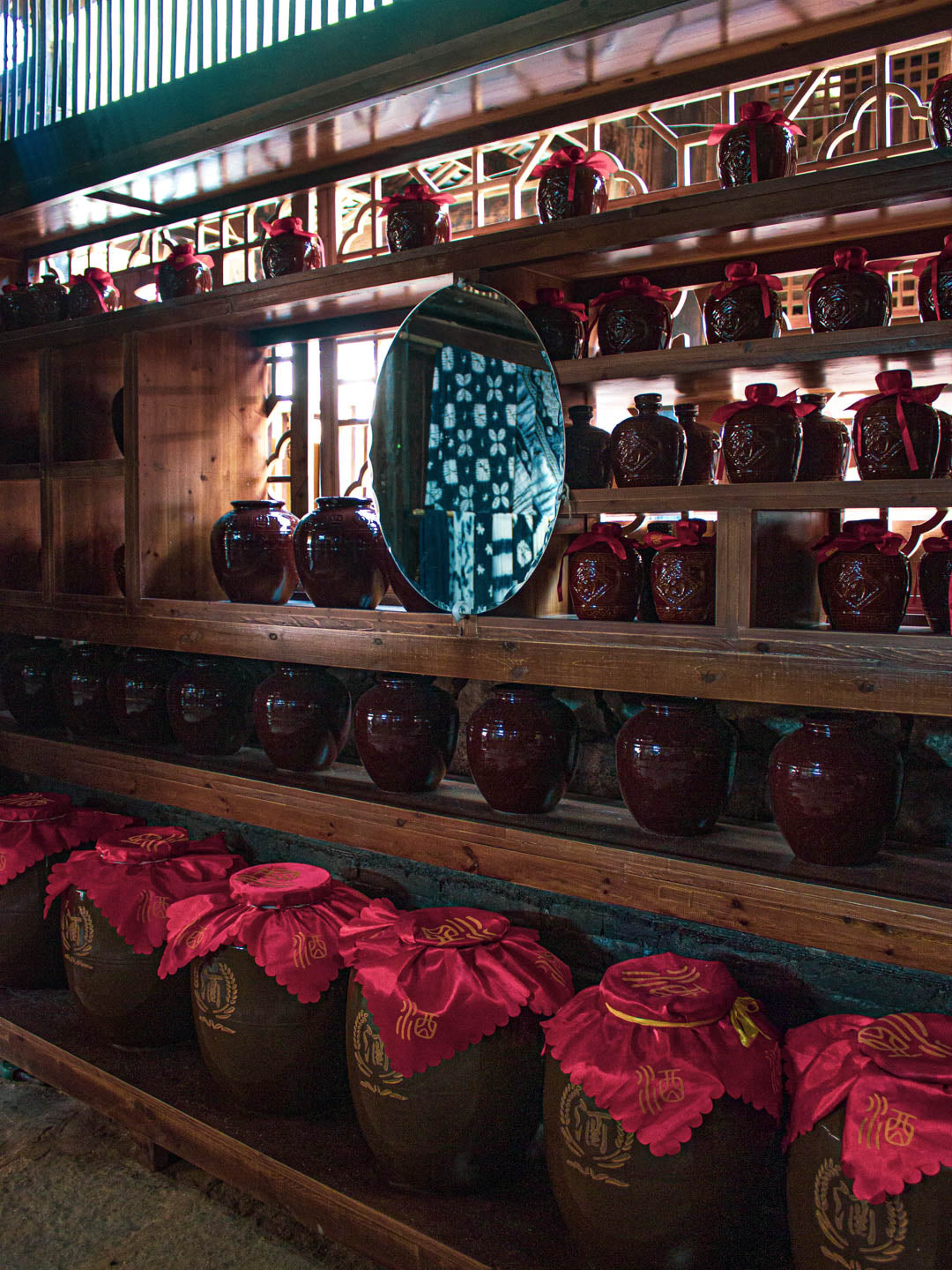
These are not decoration and they are not a display of wealth. They are storage, and what they hold is part of the same economy as the dye: something made here, kept here, and used within the valley. The red cloth over the mouth is a seal as much as a cover.
Water
Every one of these villages has a water point, and this one had been cut out of the rock: a circular stone basin, green with the water standing in it, a tree throwing shade across one side, with the wooden houses and the slope beyond.
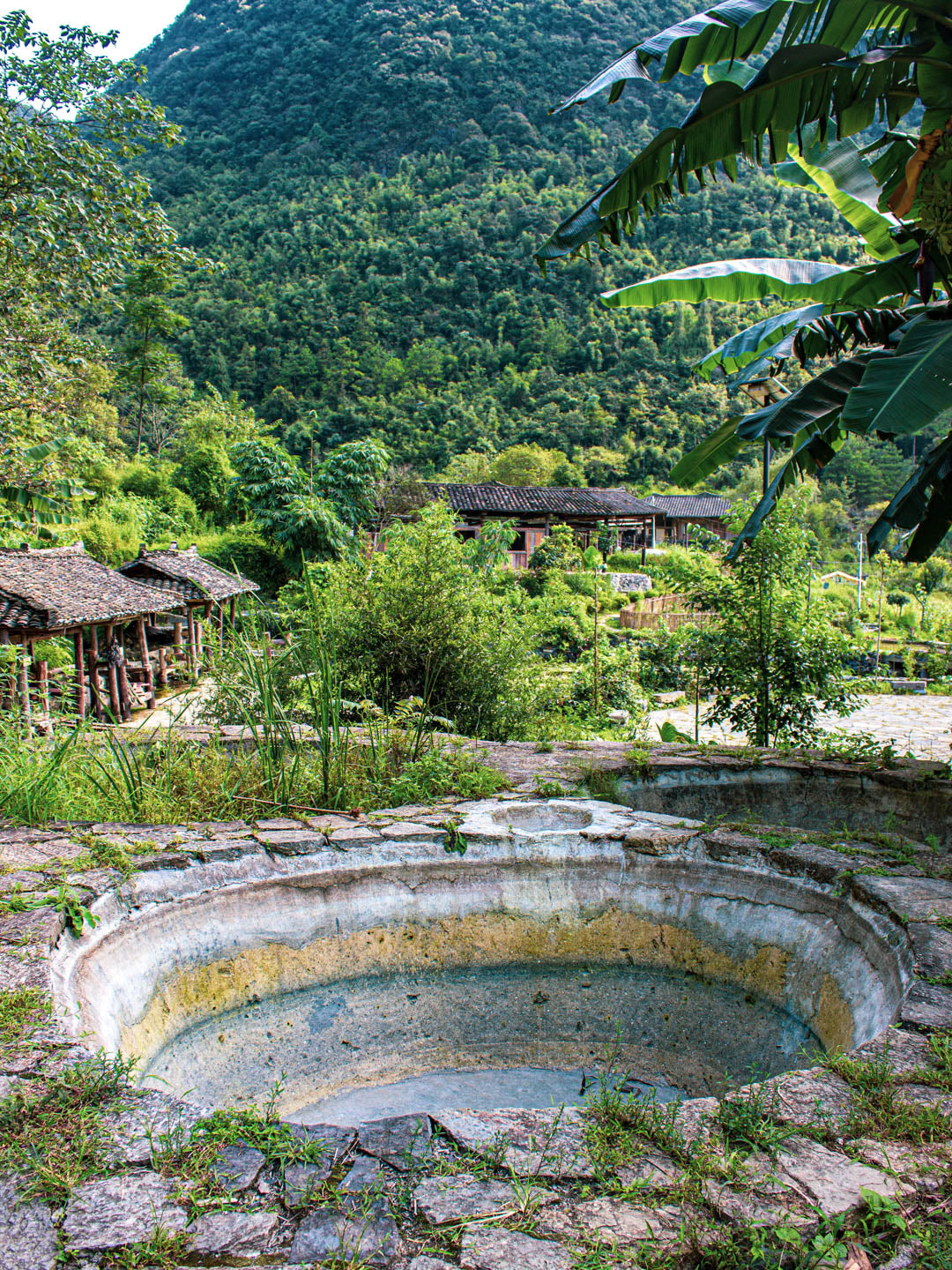
It is an ordinary thing to photograph and I am glad I did. A dye house, a balcony, a water basin, a shelf of jars — this is what a valley looks like when it has been arranged by people rather than by a planning document.
The valley from above
By the end of the walk I had climbed out of the lanes and into the fields, and the whole shape of the place came into view: terraces stepping down the slope, a wooden house with a tiled roof in the middle of them, and behind everything the karst peaks standing out of the haze in a row.
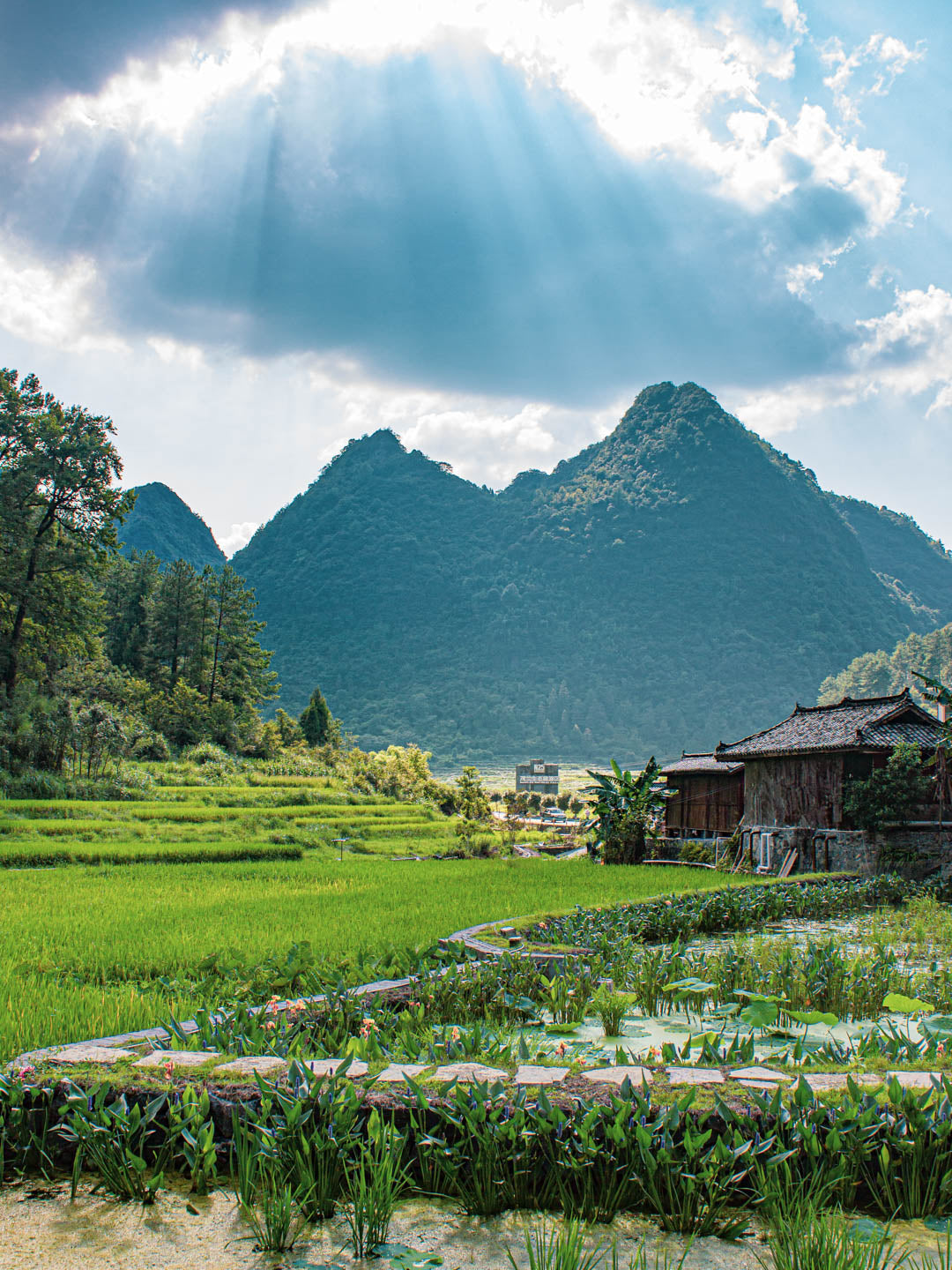
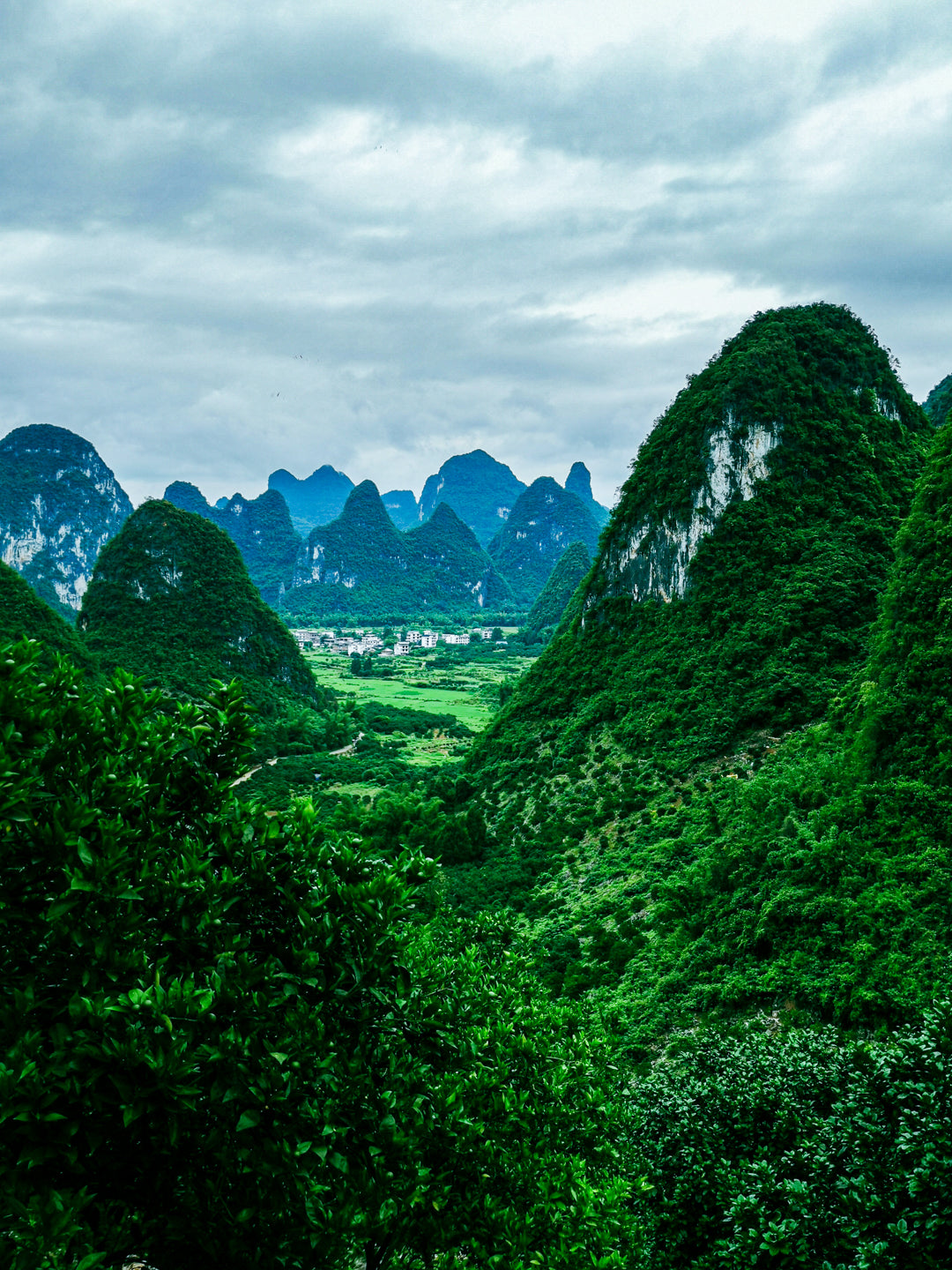
And then the wider version of the same thing — the peaks themselves, green to the top, with the valley floor running away underneath them and cloud sitting in the gaps. It is the kind of landscape that photographs itself, but only if you are willing to walk up out of the village first.
What I came home with
None of the pieces in the Kongshan collection were made in this valley, and we do not work with these dye houses. What the trip gave me was a palette and a standard. Indigo is a difficult colour to fake, which is why so much of what is sold as indigo is a blue-grey; and the villages that still do it properly get a depth that a photograph can only hint at.
Closest to it in the collection is the woven bamboo tray in blue — the colour is dyed into the weave rather than printed on it, and it holds a blue that shifts with the light instead of sitting flat. The purple tray is the same idea a few steps further along the spectrum. And for the geometry of the borders on the timber houses, the medallion chain earring, which carries a single disc of colour that catches light the way the wet cloth did on the balcony.
Handwoven bamboo tray in blue · Handwoven bamboo tray in purple · Embroidered medallion chain earrings
Guizhou is a long way from Kunming, and the valley I walked through is not where anything in this shop comes from. But the colour came back with me, and it is in the collection now — which is a reasonable answer to the question I set out with.