

Silver Under Glass: A Morning in Zhaojue, Liangshan
Zhaojue is a county town in Liangshan prefecture, in the south of Sichuan, up where the road starts doing real work. I went looking for silver and found that in Zhaojue the silver is not the loud part of the street. The clothes come first. The silver is at the back, behind glass, in a red-lined cabinet, and you have to go in and ask for it.
Which is probably why I liked it.
The sign on the shutter
The first place I stopped had a red banner stretched across the front: a clothing shop, the name printed in Chinese characters with a line of Yi script underneath and a list of what they do — 西昌服饰、批发零售. Made-up, wholesale and retail. The shutter was half open, so the street was doing what it always does in these towns: folding in and out of the shopfront.
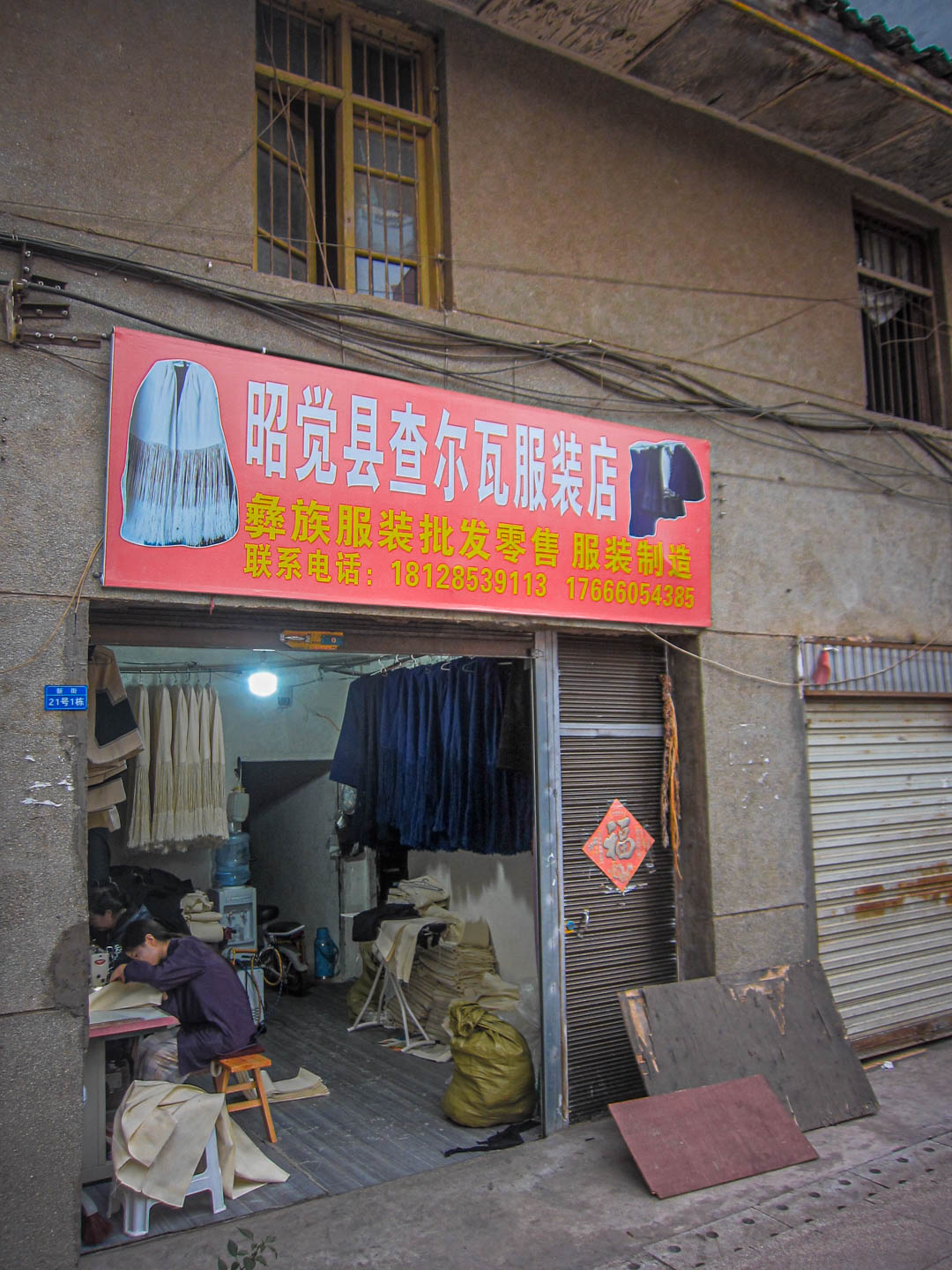
It is a plain building — rendered walls, bamboo window frames, a red diamond of paper by the door. Nothing about the outside of the shop tells you what is inside.
Clothes first
Along the same stretch of road the clothing hangs out into the street, because that is how it gets sold. Coats with wide embroidered borders in red, yellow, green and blue against black or deep red grounds. Pleated skirts. Headwraps in cobalt. A stall of black cloaks and shawls with colour worked along the edges, and beneath them, folded pieces stacked on the ground with the shoes and socks on top.
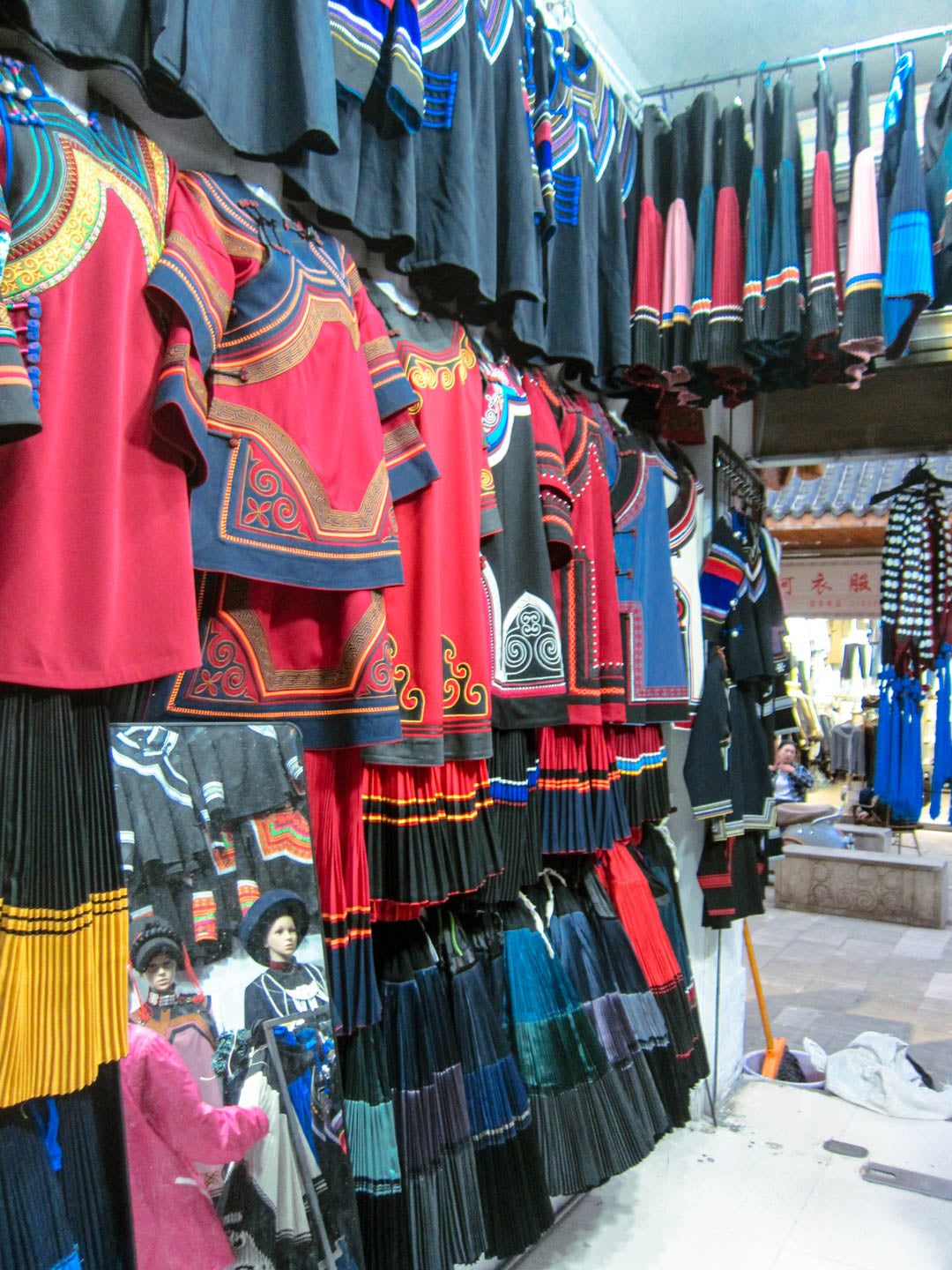
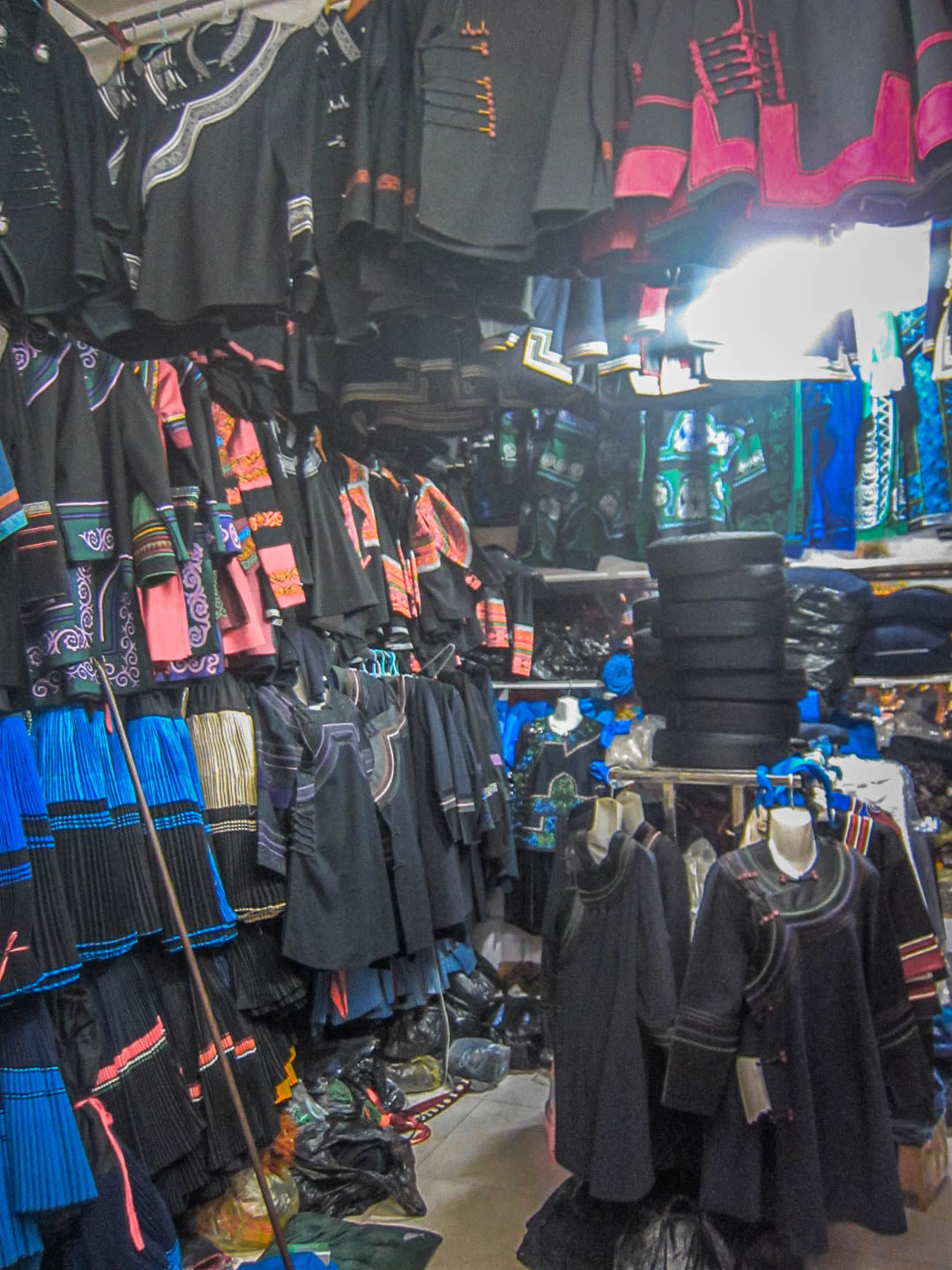
The colour in these is not decorative noise. It is a system: a ground colour, a border, a repeat. Once you see that it is impossible to unsee it, and it turns up in the silver as well.
Under glass
And then the silver, which is where I actually spent the morning.
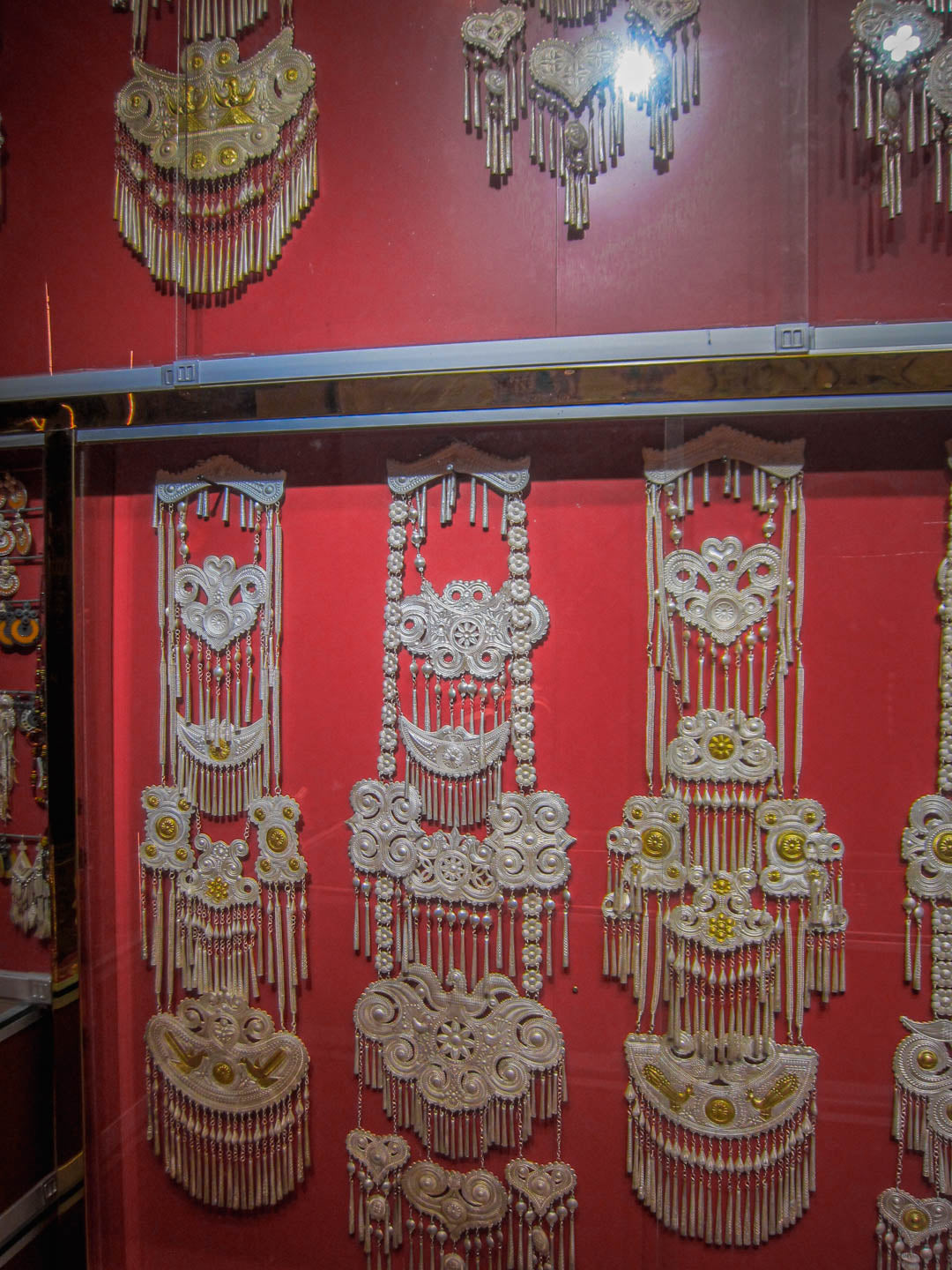
The first case was the one that stopped me. Red cloth on every surface, and hanging against it, arranged in a row, a set of silver chest pieces — large, circular, chased and embossed with sun faces, crescents and animal forms, with chains and small pendants hanging beneath them. Above them, neck rings in gold-tonished metal. Below, in a second case, silver bowls and dishes stacked flat, dull on the outside and bright where a hand has been.
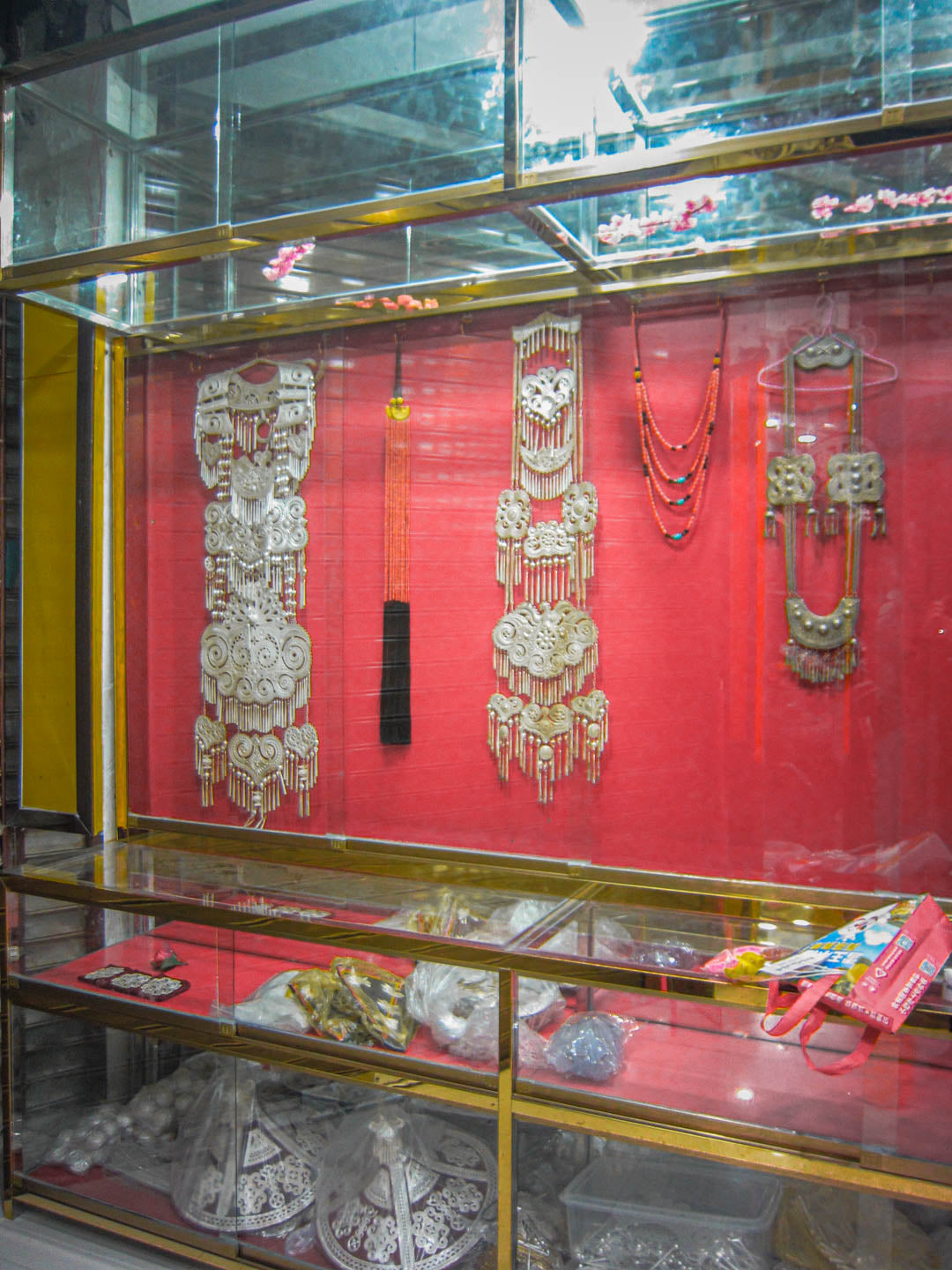
Further along, a wall of the same idea at a larger scale: heavy silver pieces with long tassels of chain and disc, hung on a red wall where the light catches every raised line. In the case below them, sets of three, arranged on the red lining like shop-window props.
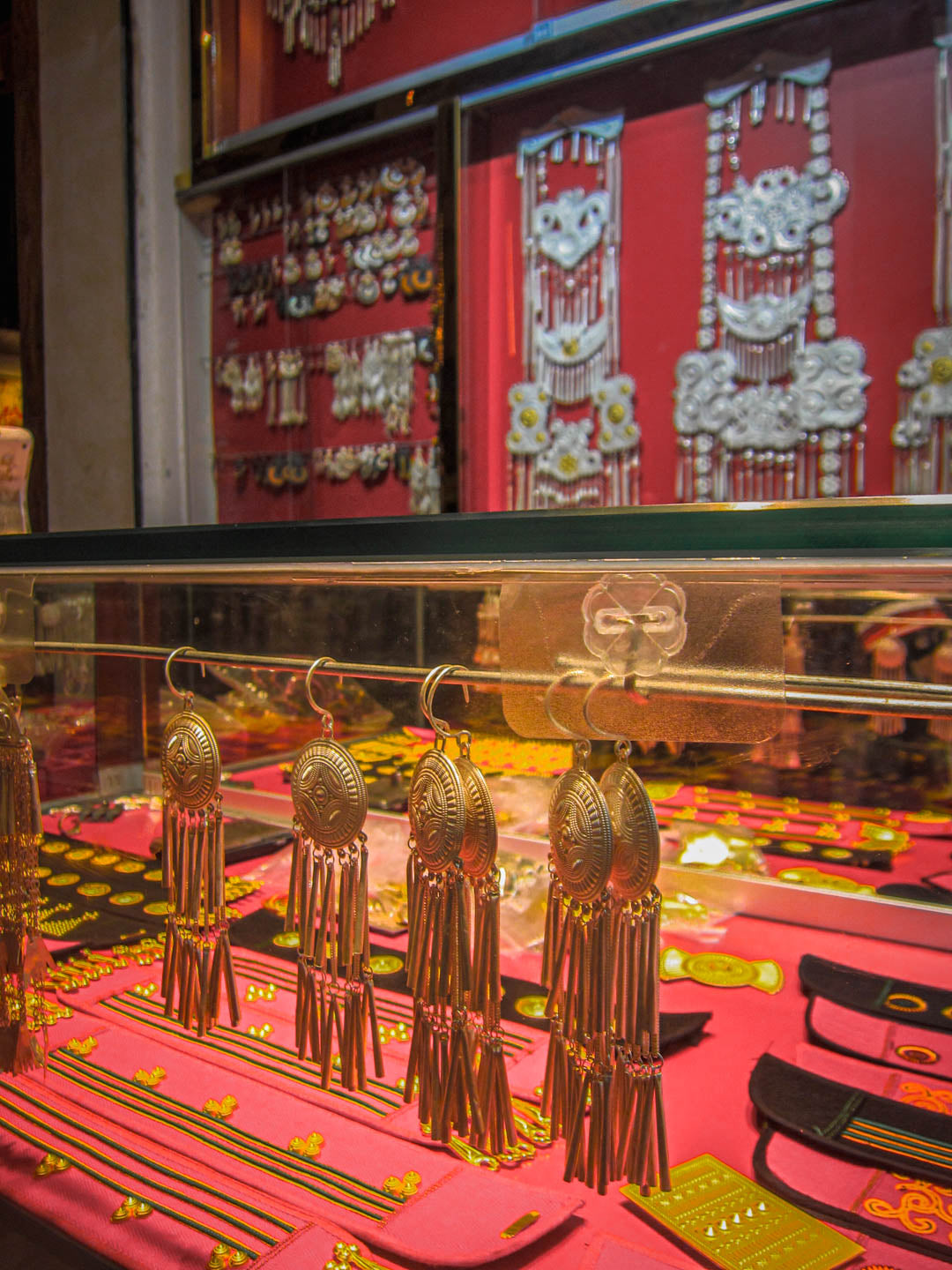
Then the counter that I had actually walked in to see: earrings and head ornaments laid out on red velvet inside glass. Silver pieces with openwork discs and small modelled forms, and beside them, gold-toned earrings with long tasselled drops that would swing when you put them on. The tassels are the part that moves and the disc is the part that catches light, and you need both.
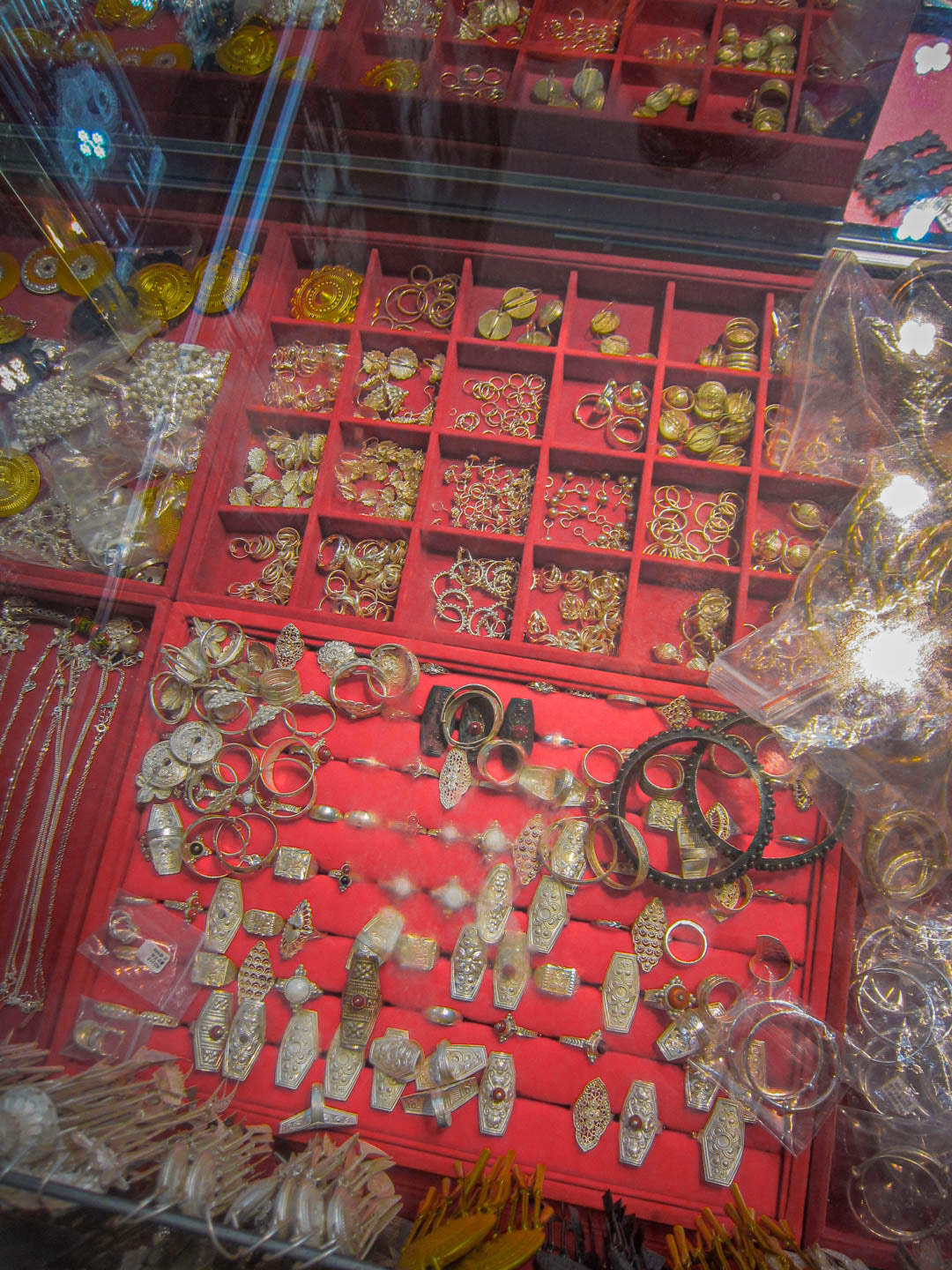
And on a table by the window, a red tray divided into compartments, every one of them full: bracelets, rings, earrings, pendants, small chains, most of them still in plastic bags from the workshop. The sorting is beautiful and completely functional — you flip through the tray the way you flip through a box of screws.
The one I could not leave alone
On the counter, half buried under a jacket, was a black leather bag. It is soft, unstructured, with a spiral pattern pressed into the leather and a single white bead set at the strap where it folds over. Behind it somebody was sorting a stack of pleated black skirts, and an oil bottle sat on the counter as if it had been there all week.
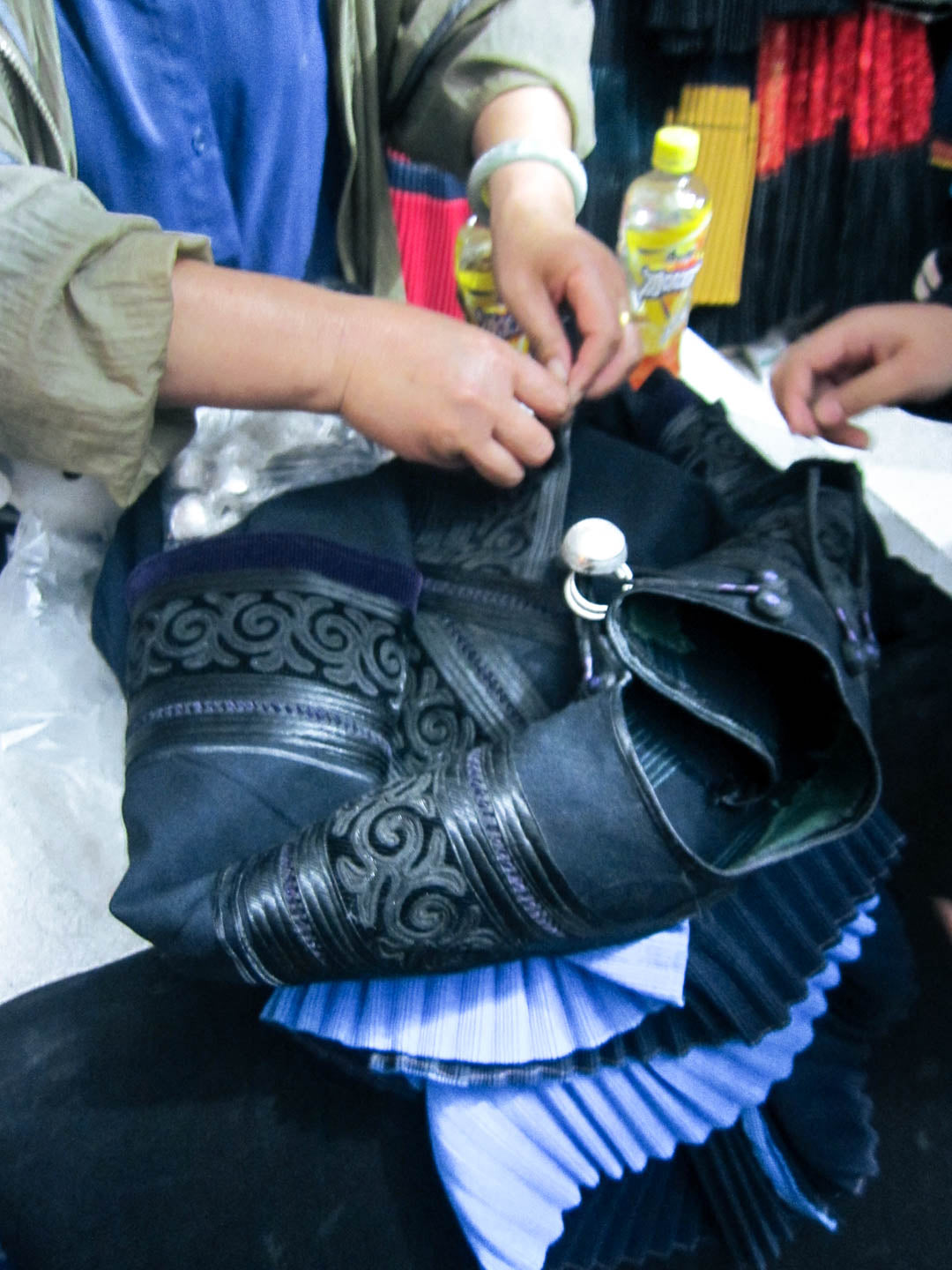
It was the only object that day I could have carried away without thinking about the purchase. The pressing on the leather is the same logic as the chasing on the silver — one continuous line, worked into the surface rather than applied on top of it. And a white bead on a black strap is a lesson in restraint: you only get to make one statement, so make it once.
Later, in Huili
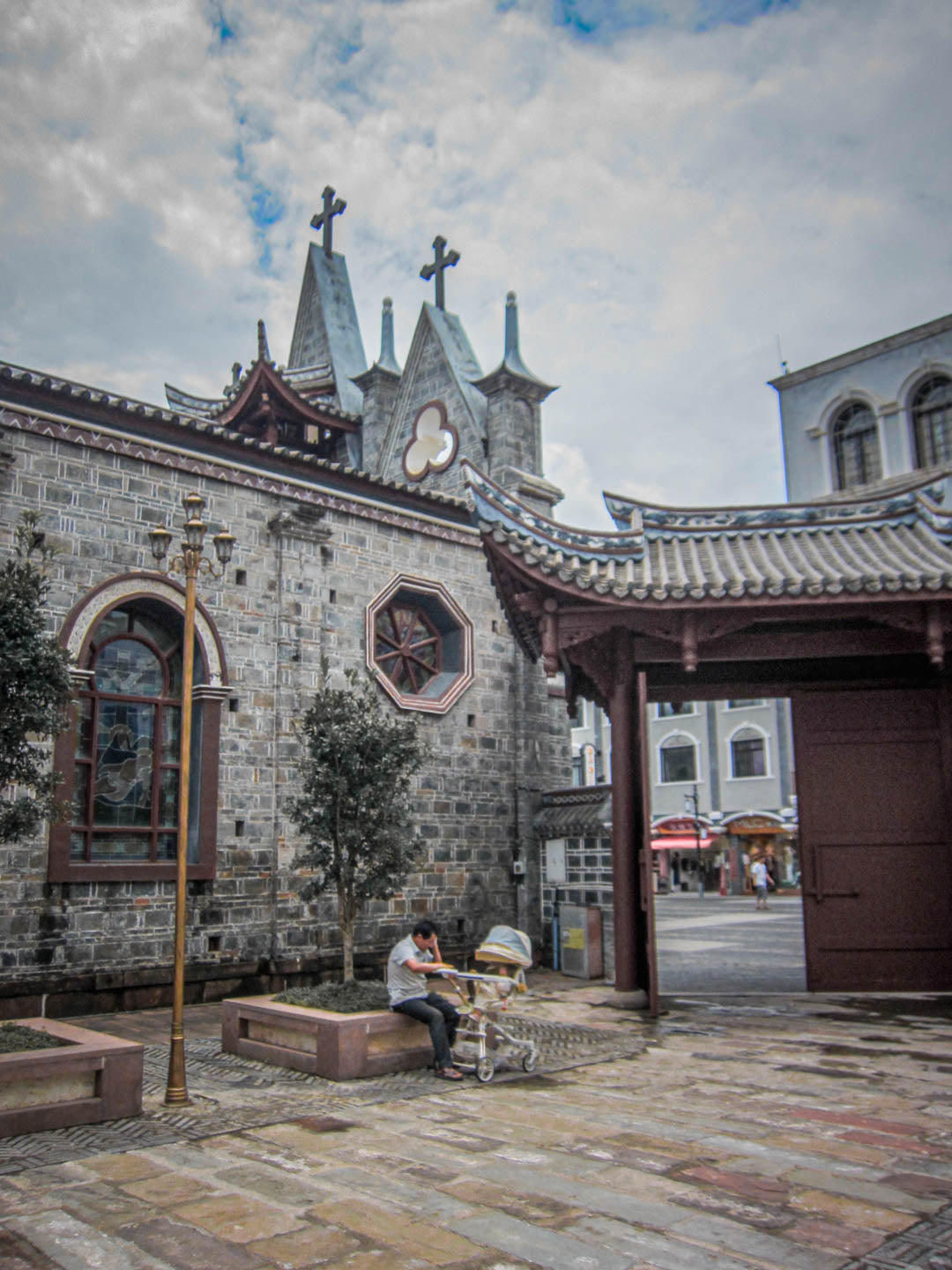
I spent the rest of the day in Huili, the older town down the road, and the change of pace was welcome. Huili is a different proposition entirely: a working street with a church in it.
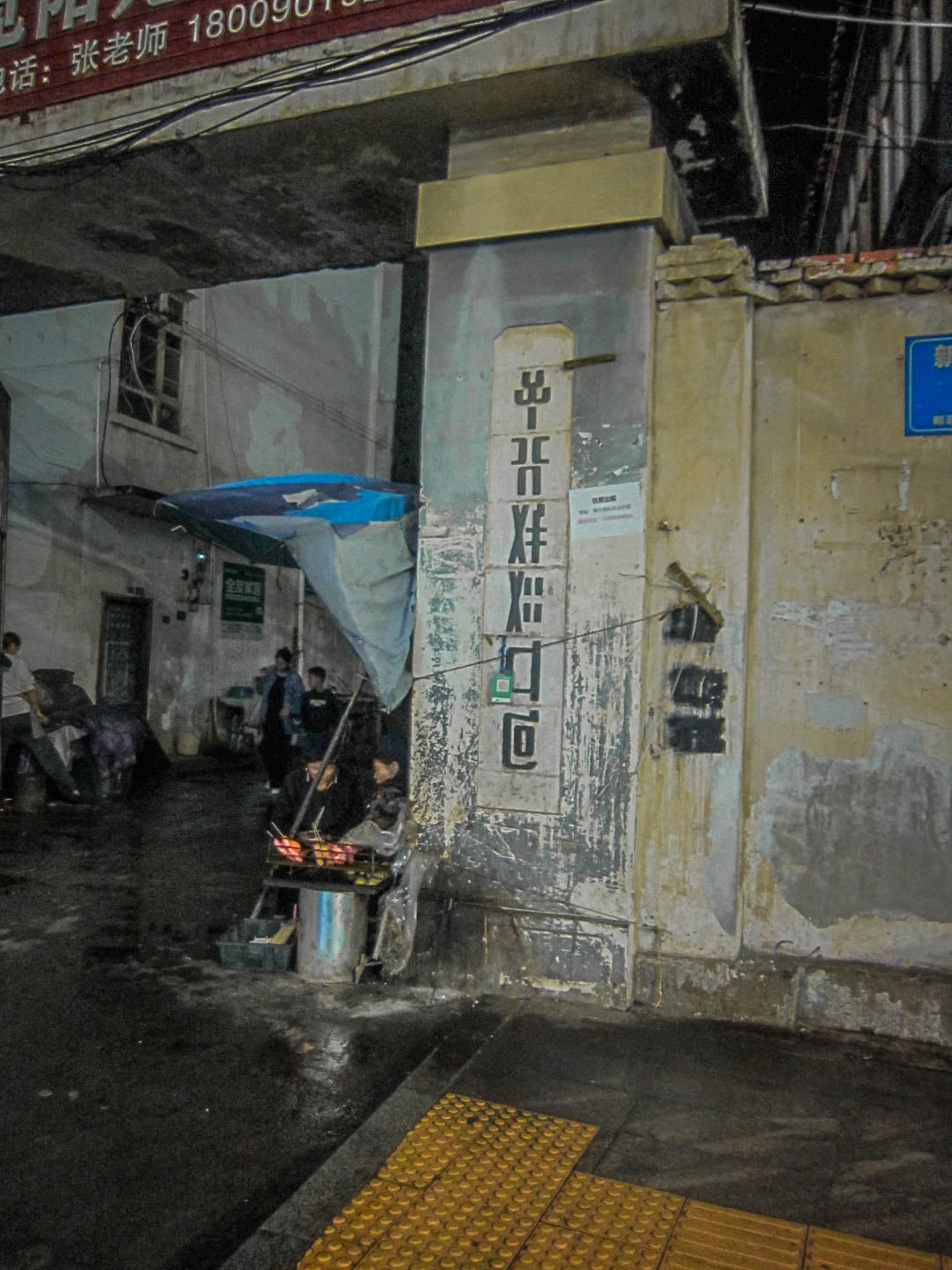
The church is built of stone, with spires and crosses against the sky, and a Chinese tiled roof with a turned-up corner right beside it — two building traditions sharing a wall without either one apologising. People sat on the steps in the shade. Out on the main street, faded painted advertisements still climb the rendered walls above the shopfronts, a blue and white parasol, a motorbike parked on the paving, a yellow tactile strip running along the kerb.
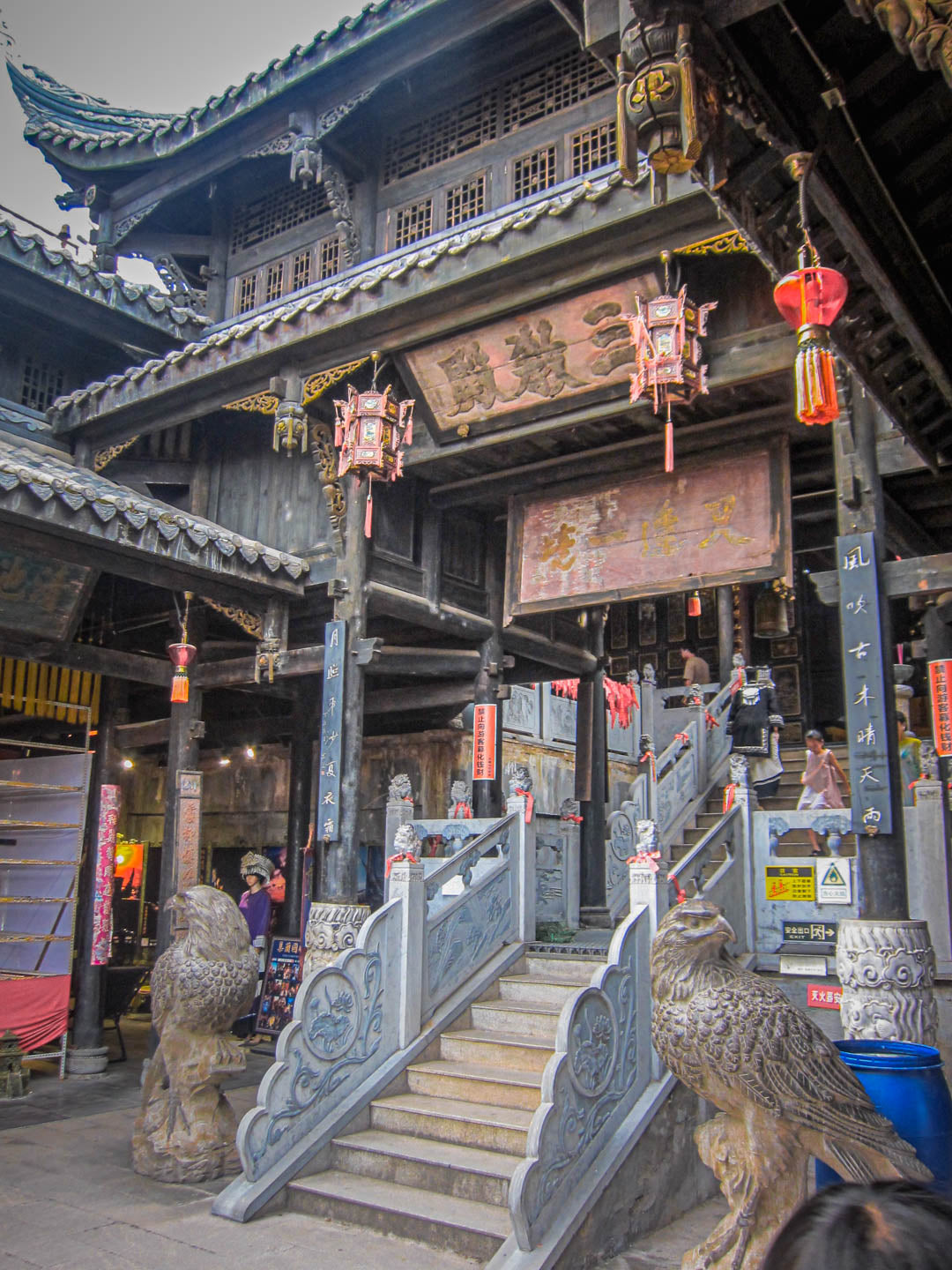
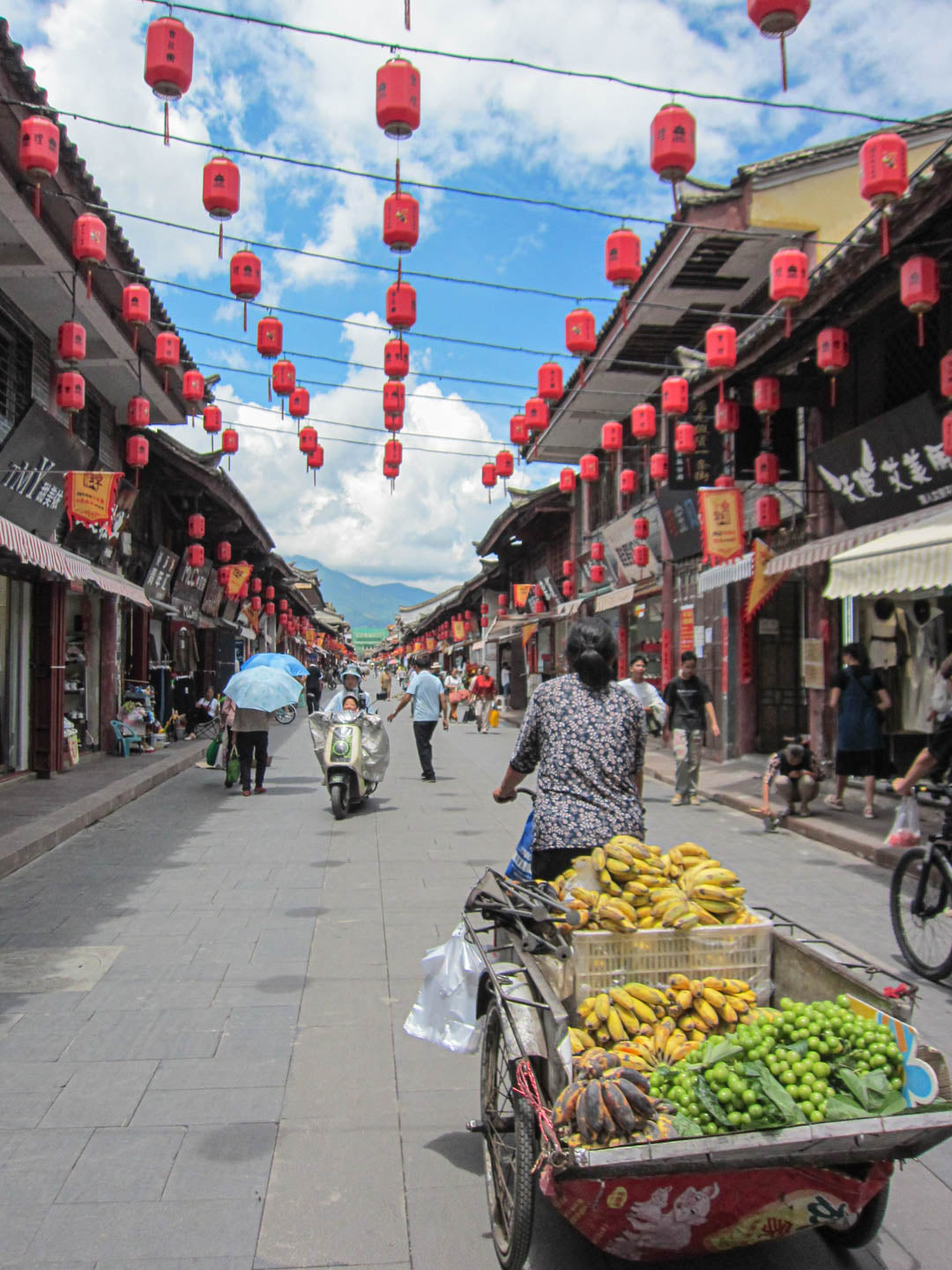
Further in, the street turns into an old-style commercial block: dark tiled roofs with white walls and upswept eaves, red lanterns strung the whole length of the lane, stone lions at the foot of the steps, a fruit cart with mandarins and grapes pushed to the edge of the pavement. The lanterns are still lit during the day.
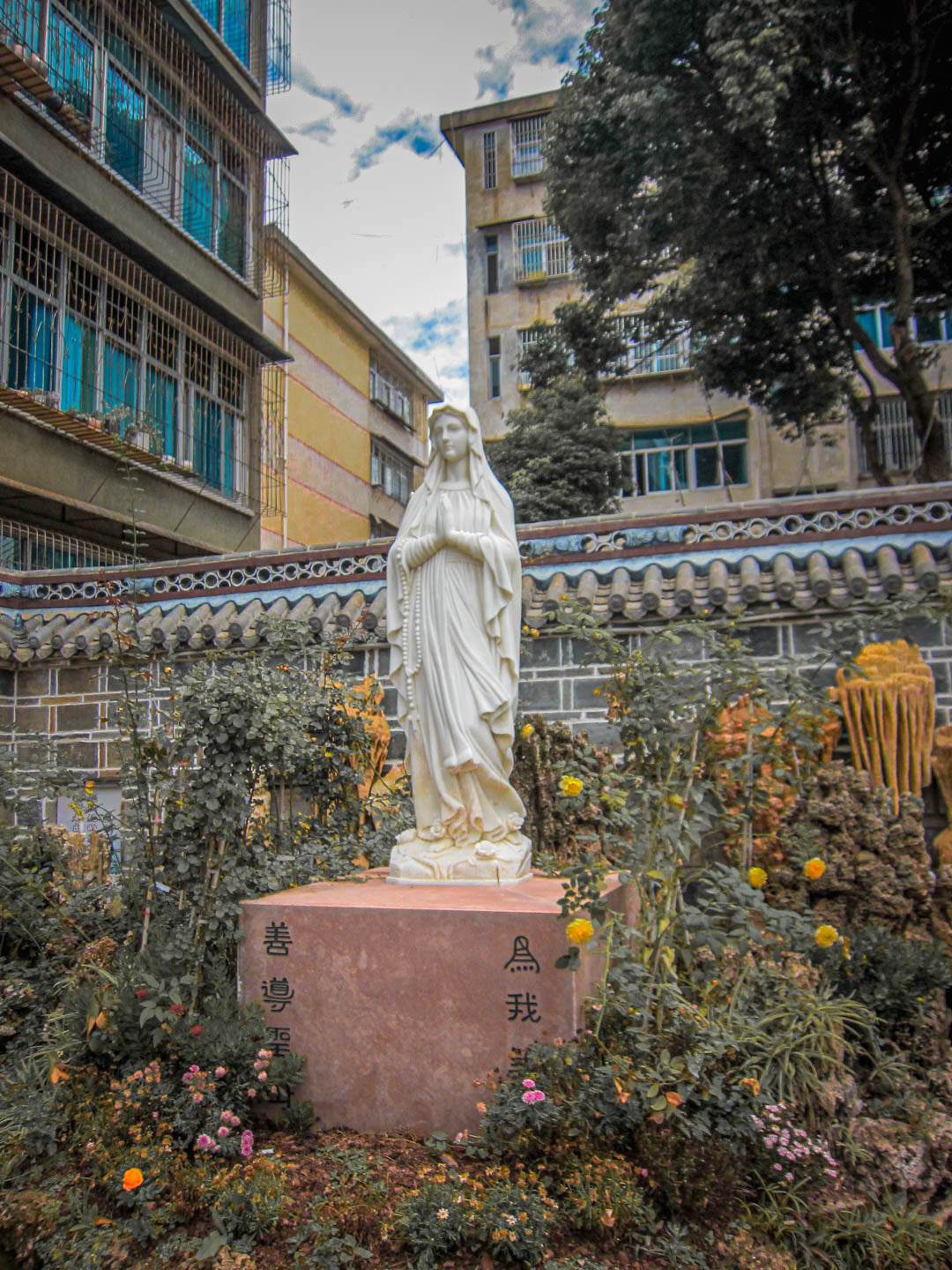
In a garden behind the street, a white stone figure stands on a plinth among chrysanthemums, with the old tiled roofs and a block of blue-glazed windows behind it. The inscription on the plinth is short. You read it, you look away, and the town goes on around you.
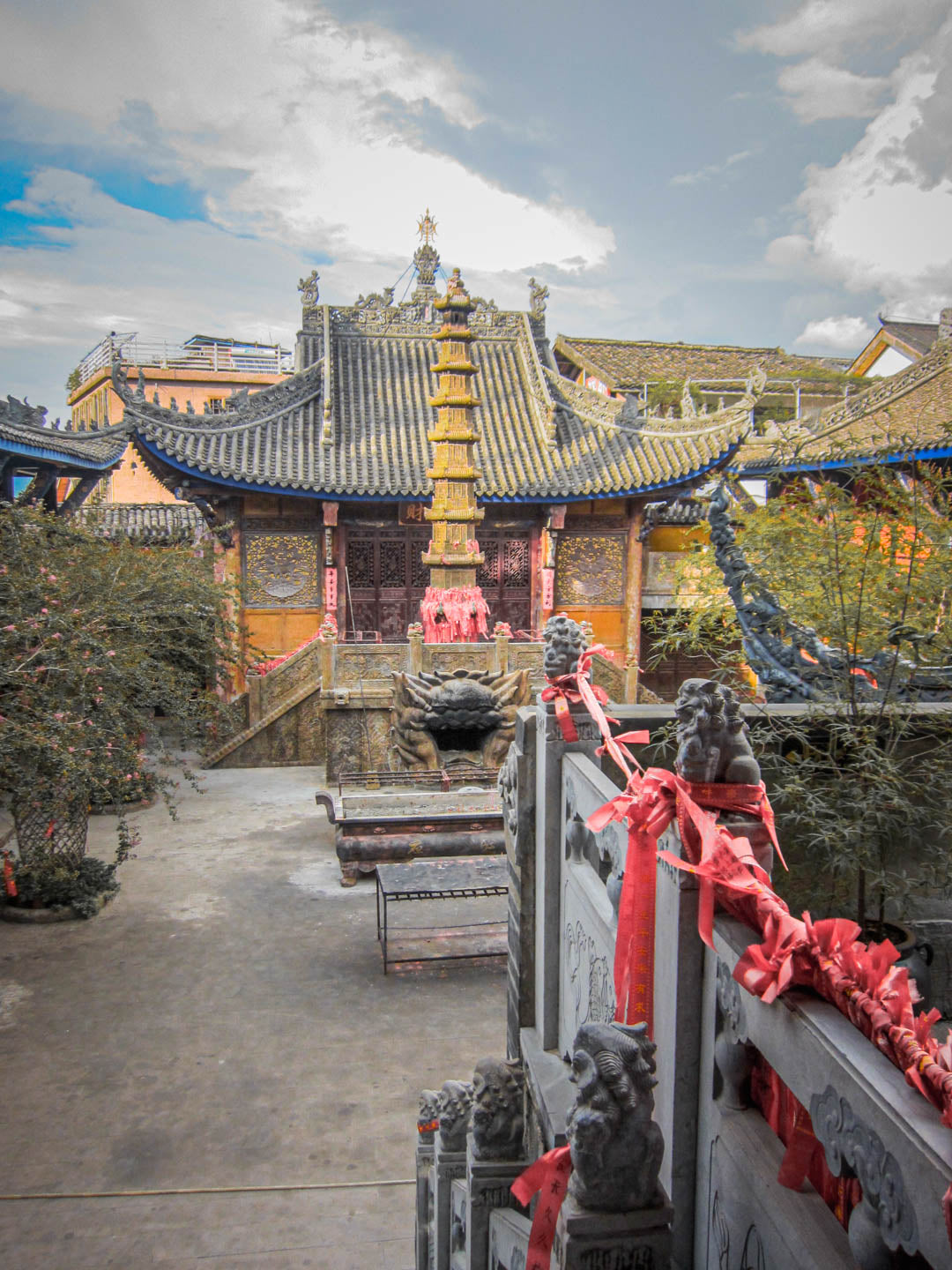
And at the far end of the complex, the temple roof: grey tiles turning up at the corners, painted eaves in blue, red and gold, a gilded finial above, and red ribbons tied along the stone railing. Somebody tied those ribbons recently.
What I came home with
Nothing in the Kongshan collection was bought that day, and the people in those shops are not our suppliers. What the day gave me was a rule for the small things we do make: one disc that catches light, one line that does the work, and colour only where it counts.
The embroidered tube earring with the silver disc is the closest thing I have to the pieces in that first case — a single circle of chased metal on a woven tube. The tasselled version picks up the drop of the long gold earrings. For the black-and-red geometry of the clothing stalls, the frog-knot fabric earring in red. And the medallion chain earring, for the idea of a disc that moves when you turn your head.
Embroidered tube and silver disc earrings · Embroidered tube and tassel earrings · Embroidered medallion chain earrings · Frog knot fabric earrings in red
The town of Zhaojue is a long way from Kunming, and I have not turned it into a supply line. But the standard it set is simple enough to apply anywhere: a small object, finished properly, catching light in one place instead of everywhere.